International Physical Internet Conference:
Empowering Sustainable and Resilient Supply Chains

Brief Presentation
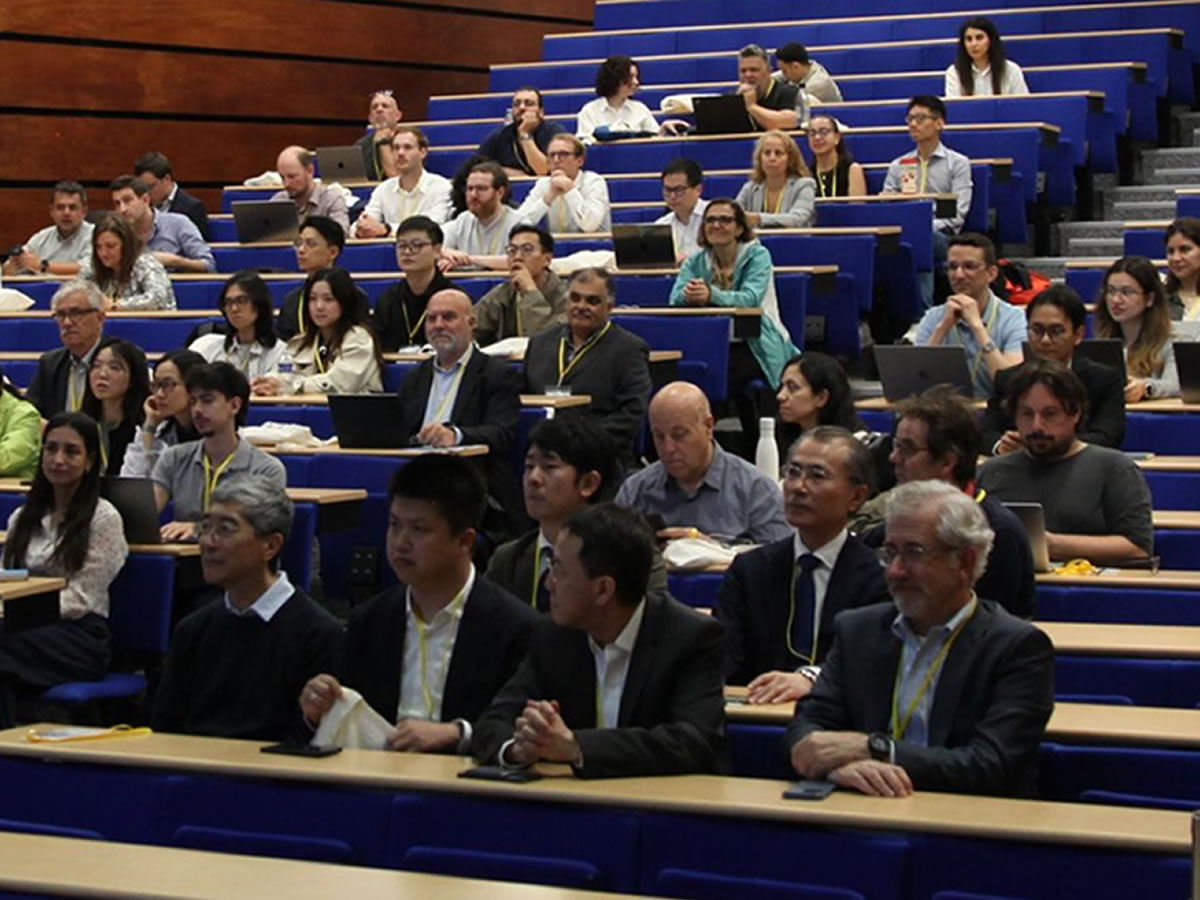
La 12th International Physical Internet Conference (IPIC 2026) was the leading international scientific event dedicated to research, innovation, and the advancement of the Physical Internet paradigm. Jointly organized by KEDGE Business School, ALICE and IMT Mines Albi, the conference brought together researchers, companies, institutions, and stakeholders from around the world to discuss the latest developments in open, interoperable, and collaborative logistics networks. Through a multidisciplinary approach, IPIC 2026 explored strategic topics such as supply chain resilience, transport decarbonization, synchromodality, the circular economy, and the digital transformation of logistics, confirming its role as the premier international forum for the scientific and industrial communities engaged in the development of the Physical Internet.
Scope
The research scope of the International Physical Internet Conference (IPIC) focused on the development of the Physical Internet paradigm, one of the most innovative scientific perspectives for transforming global supply chains and logistics systems. Inspired by the principles of openness, interoperability, and sharing that characterize the digital Internet, the Physical Internet proposed a new vision of logistics based on interconnected physical networks in which goods, infrastructures, transport assets, and information can be coordinated efficiently, collaboratively, and sustainably. Throughout the conference, multidisciplinary topics were addressed, ranging from the design of intelligent logistics networks to advanced traceability, from data interoperability to digital twins, and from artificial intelligence to resilient supply chain management. Particular attention was devoted to enabling technologies, including the Internet of Things, data-sharing platforms, cyber-physical systems, automation, blockchain, and event-driven orchestration models. Another important area of interest concerned the environmental and economic sustainability of logistics systems through the analysis of models focused on transport decarbonization, the circular economy, reverse logistics, and synchromodality. In this context, the Physical Internet was presented as a strategic paradigm for building more resilient, adaptive, and interoperable supply chains capable of addressing the challenges posed by the growing complexity of global markets and modern distribution networks.
Results Achieved Through Participation
Participation in IPIC 2026 provided the opportunity to present two scientific contributions focused on interoperable traceability in fresh-produce wholesale markets and end-to-end visibility in clinical trial healthcare logistics. The event represented an important opportunity for discussion and exchange with leading international Physical Internet researchers and with major companies involved in the development of innovative projects related to interoperability, supply chain intelligence, logistics digitalization, sustainability, and collaborative logistics networks, fostering new opportunities for scientific and project-based collaboration at the international level.
Organizers
KEDGE Business School, ALICE - Alliance for Logistics Innovation through Collaboration in Europe (ETP LOGISTICS) and IMT Mines Albi
DATE
June 8–10, 2026LOCATION
Bordeaux, FranceFirst Paper Presented at the Conference
The TREATMENT Project: a Physical-Internet-Enabled Reference Architecture for End-to-End Visibility in Direct-to-Patient Clinical Trial Logistics
The study aimed to develop a Physical Internet-enabled reference architecture for the end-to-end management of direct-to-patient clinical trial logistics, with particular attention to chain-of-custody continuity, document-event correlation, and intermodal coordination (road–drone). The objective was to overcome the informational and operational fragmentation typical of regulated environments by transforming complex logistics flows into an orchestrated system based on validated events, milestones, and explicit release rules.
Results Achieved
The paper proposed an integrated architecture combining connected logistics units (smart boxes and smart capsules), a neutral multi-tenant platform, and a single-trace interoperability mechanism capable of unifying EPCIS 2.0 events and GS1 EDI documents. The main contribution consisted in redefining logistics visibility as a decision-orchestration infrastructure based on verified milestones, enabling a pull-based and rule-based logic for intermodal coordination. The results demonstrated complete traceability, chain-of-custody integrity, the correlation between physical and documentary events, and the possibility of dynamically activating drone services based on the validated status of the network. The framework therefore introduced an operational governance model in which execution is not driven by static planning but by verifiable conditions, ensuring auditability, interoperability, and transferability within regulated healthcare logistics environments.
The paper was presented in the session “Urban Living Labs and Sustainable Implementation”, dedicated to the analysis of applied case studies, territorial experimentation, and operational models aimed at translating Physical Internet principles into concrete solutions for urban logistics, sustainability, and the implementation of innovative logistics ecosystems.
Bibliographic Citation
Maciariello, F., Lorenzi, E., Caponio, C., Tortora, G., & Salvadori, C. (2026)..
The TREATMENT project: A Physical-Internet-enabled reference architecture for end-to-end visibility in direct-to-patient clinical trial logistics. In Proceedings of the International Physical Internet Conference (IPIC 2026): Empowering Sustainable and Resilient Supply Chains. Bordeaux, France.
Second Paper Presented at the Conference
Digitalizing a Territorial Fresh-Produce Wholesale Market as a Physical-Internet Node: Container-Centric Traceability, Evidence Packages, and Controlled Transparency at Mercato Ortofrutticolo del Roero
The study aimed to design and formalize a container-centric digitalization architecture for wholesale fresh-produce markets, treating them as Physical Internet nodes. The primary objective was to enable granular traceability, interoperability, and selective data sharing in environments characterized by high operational complexity, multiple stakeholders, and perishability constraints, overcoming the limitations of traditional systems based on aggregated logistics units (batches or shipments) and uncontrolled visibility models.
Results Achieved
The paper proposed a multilayer architecture integrating logistics-unit identification (reusable crates), standardized event capture (GS1 EPCIS 2.0), environmental sensing, logistics aggregation, and controlled transparency mechanisms within a single interoperable platform. The main contribution consisted in redefining traceability in wholesale fresh-produce markets as an emergent property of architectural design and evidence mechanisms (evidence packages), rather than merely a result of data collection. The framework enables the preservation of accountability and cold-chain integrity during consolidation processes, improves the verifiability of operations, and supports selective data-sharing models among supply chain actors.
The paper was presented in the session “Digital Twins, Traceability and Data-Space Execution”, dedicated to the application of digital technologies to enable visibility, interoperability, and advanced coordination within Physical Internet logistics networks.
Bibliographic Citation
Salvadori, C., Maciariello, F., Lorenzi, E., Torchio, M., & Abrate, S. (2026)..
Digitalizing a territorial fresh-produce wholesale market as a Physical-Internet node: Container-centric traceability, evidence packages, and controlled transparency at Mercato Ortofrutticolo del Roero. In Proceedings of the International Physical Internet Conference (IPIC 2026): Empowering Sustainable and Resilient Supply Chains. Bordeaux, France.